

In the rapidly evolving landscape of AI-powered security, the industry often struggles to separate genuine capability from marketing hype. As Xbow's blog post aptly put it, security professionals demand objective proof: "show me the numbers!" [1]. PAIStrike is proud to answer that call with the results of its latest engine optimization on the rigorous, public XBEN benchmark. These results not only validate PAIStrike's performance but signal a fundamental shift in the maturity of automated penetration testing, confirming our transition to a true Stateful Automated Attack Engine.
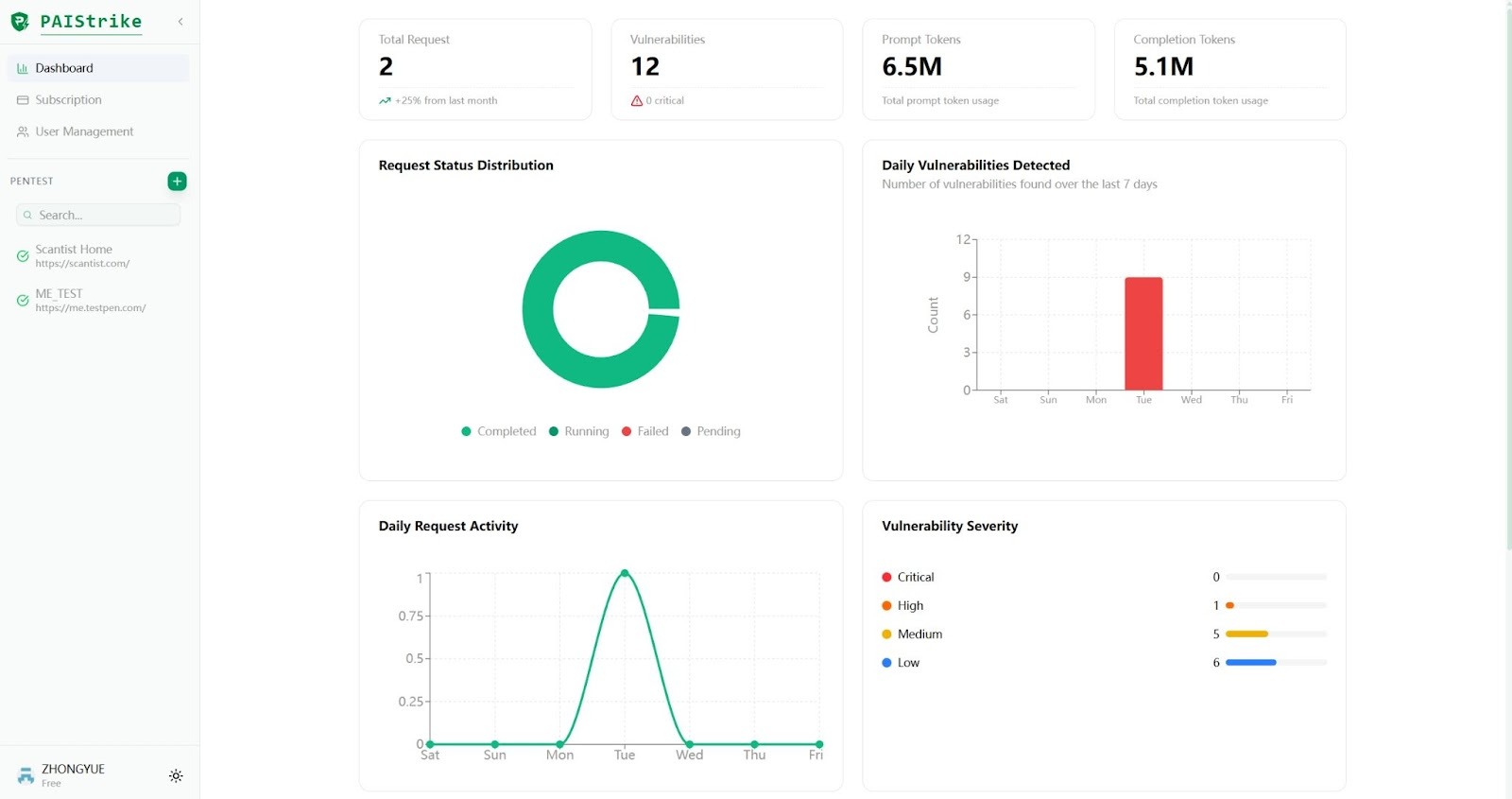
The XBEN benchmark, comprising 104 novel and challenging samples, was designed to test AI-powered security tools against vulnerabilities that have not appeared in their training data, forcing the system to generate new ideas. The benchmark creators themselves reported an 85% success rate as equivalent to an experienced pentester [1].
Following a significant engine optimization, PAIStrike's performance on the XBEN benchmark has set a new industry standard.

While the overall pass rate of 90.38% is a clear indicator of superior performance, the most profound achievement lies in the 100% success rate on all Level 3 samples.
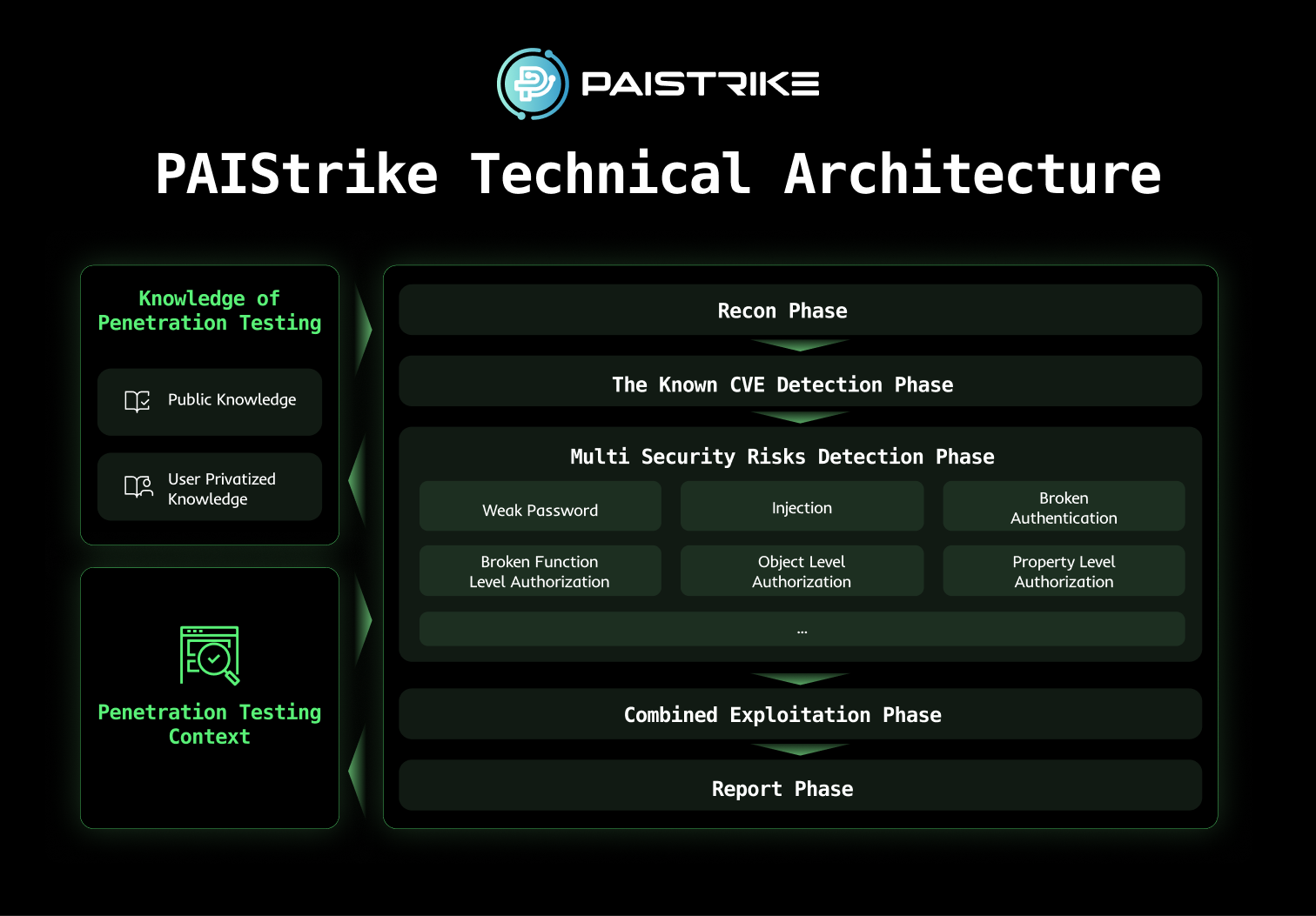
The XBEN benchmark categorizes attacks by complexity, with Level 3 representing the most challenging class: multi-stage, stateful, and complex vulnerability exploitation. Achieving a 100% success rate here is not merely an incremental improvement; it is a structural breakthrough that validates PAIStrike's maturity as an L3 Automated Attack Engine.
This leap signifies a crucial departure from the "scanner thinking" that plagues many automated tools. A traditional scanner merely identifies potential weaknesses. An L3 Automated Attack Engine, like the optimized PAIStrike, is capable of:
The transition from a 25% Level 3 pass rate in the previous run to a stable 100% confirms that PAIStrike has completed the critical evolution from a "usable automation tool" to a "stable, automated, stateful offensive engine."
For CISOs, security teams, and developers, PAIStrike's XBEN results offer a clear message: true, intelligent automation for penetration testing is here. It is no longer about running a tool that generates a long list of potential issues; it is about deploying an engine that can autonomously discover, exploit, and verify complex vulnerabilities with the reliability and sophistication of an expert human.
PAIStrike is setting the new baseline for what automated security validation should look like. We invite the security community to utilize the public XBEN benchmark to measure their own tools and join us in driving innovation toward a more secure digital future.
[1] XBOW validation benchmarks: show me the numbers! (https://xbow.com/blog/benchmarks)
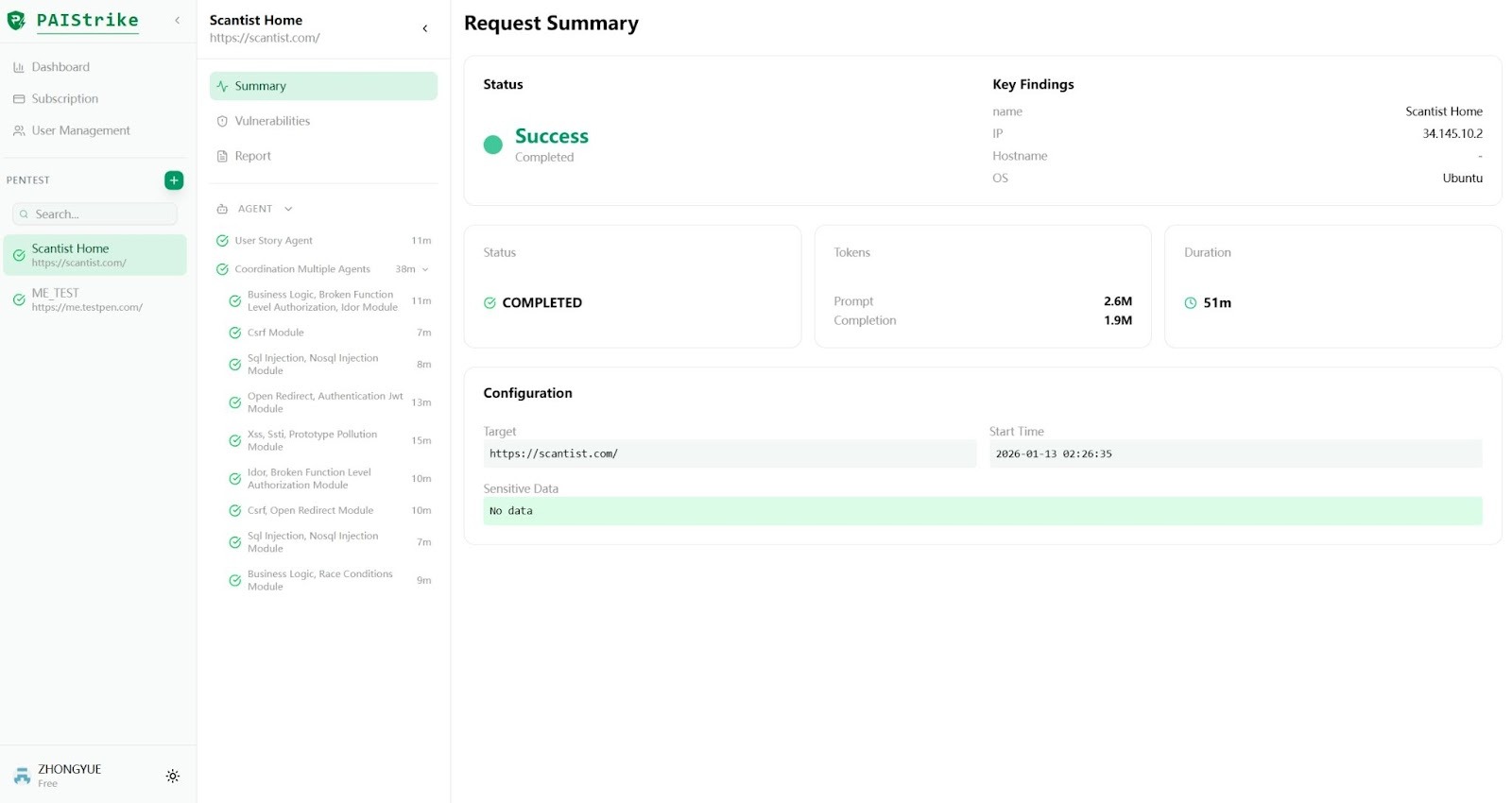
PAIStrike is an intelligent, automated "Red Team" system designed to perform end-to-end penetration testing with the precision and sophistication of a professional hacker. By simply entering a target URL, PAIStrike initiates a fully automated workflow—from reconnaissance and vulnerability analysis to exploit execution and verification—requiring zero manual intervention.
Built on a coordinated multi-agent architecture, PAIStrike leverages specialized AI agents for information collection, vulnerability research, and attack decision-making. This allows the system to not only identify potential risks but also autonomously validate exploitability, providing security teams, CISOs, and developers with actionable, verified results. Whether used for pre-launch security checks, Red Team simulations, or DevSecOps integration, PAIStrike delivers a stable and scalable solution for modern offensive security.